Last updated: October 12, 2026
Supporting Cellular Regeneration: What Truly Matters in 2026
Cellular regeneration is the body's ability to repair damaged cells and generate new ones. It is an ongoing process, but it requires the right conditions: optimal nutrients, quality sleep, movement, and recovery. That is precisely what we will explore here. (Source: The importance of phytochemicals)
Many people over 50 know the feeling: recovery takes longer than it used to. The root cause often lies deeper, at the level of the mitochondria—the powerhouses of our cells. At ZELLGIPFEL, we focus daily on exploring how to effectively support these fundamental processes.
The encouraging news: much of this can be supported through natural approaches. Nutrition, sleep, and physical activity form the foundation. Yet many guides remain superficial—listing certain foods without addressing timing, or emphasizing sleep without looking at sleep quality.

Nutrition for Cellular Regeneration: What Belongs on Your Plate
A well-balanced diet provides the essential building blocks for cellular renewal. Without these elements, the body cannot carry out repair processes effectively, no matter how well you sleep. What matters is not only what you eat, but also when you eat.
An aspect often overlooked is meal timing. Chrono-nutrition investigates how the timing of food intake influences cellular metabolism. Eating heavy meals late in the evening can disrupt nighttime recovery and repair.
Key elements for cellular metabolism include:
- Proteins for the formation of new cells
- Healthy fats for cell membrane integrity
- Phytochemicals as protective agents
- Vitamins and minerals as vital cofactors in metabolic processes
Targeted Use of Phytochemicals and Antioxidants
Phytochemicals (secondary plant compounds) are natural substances found in plants. They give berries their vibrant colors and protect plants from environmental stressors. In the human body, many of them act as antioxidants.
Antioxidants help neutralize free radicals—reactive molecules that can cause cellular stress and damage. An excess of free radicals is often linked to cellular wear and premature skin aging.
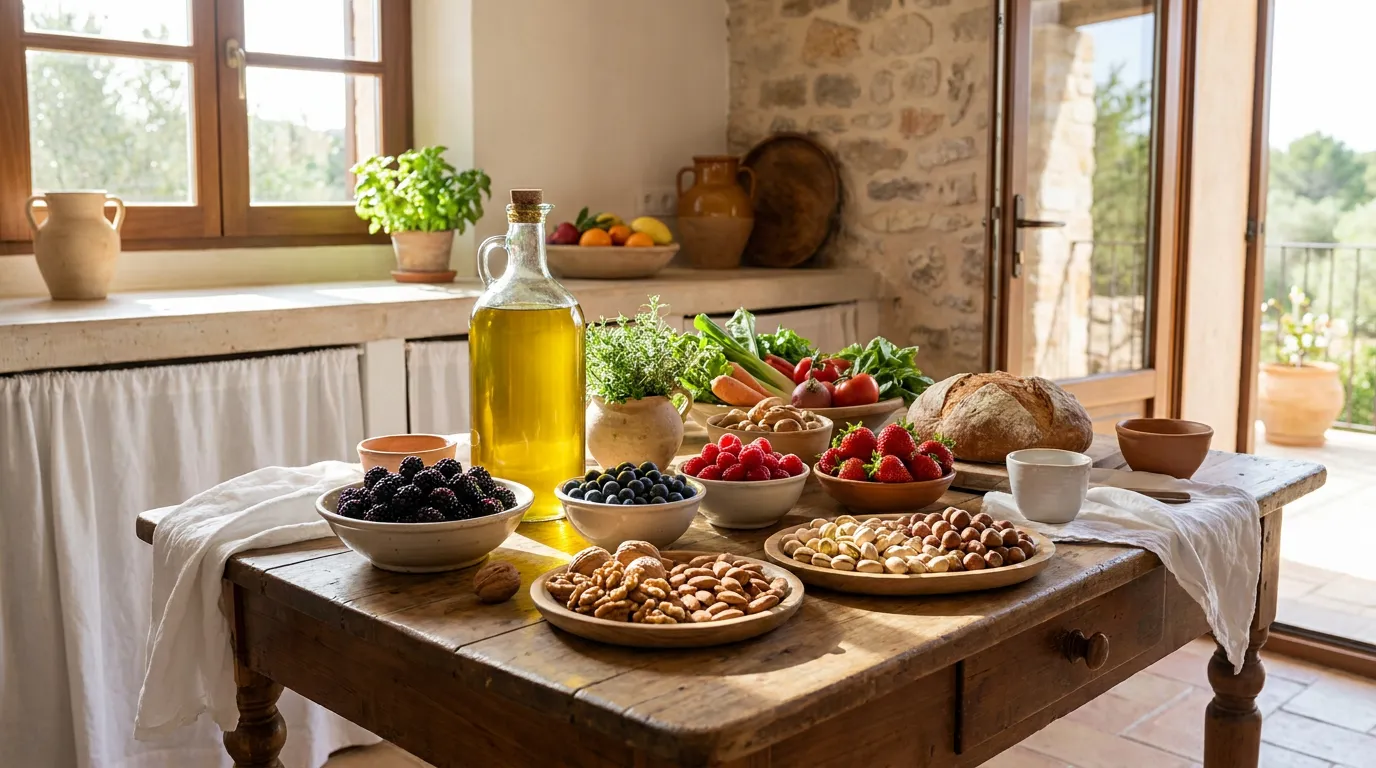
In practice, the approach is simple: eat a colorful variety of foods. The wider the range of colors on your plate, the broader the spectrum of beneficial plant compounds.
- Red fruits: berries, cherries, pomegranate
- Green vegetables: broccoli, spinach, kale
- Orange and yellow: carrots, bell peppers, turmeric
- Blue and purple: blueberries, red cabbage, eggplant
An important consideration: studies suggest that high-dose supplements with isolated antioxidants do not offer the same holistic benefits. The complex synergy found in whole foods cannot simply be captured in a single capsule.
Foods for Cellular Renewal: Choices That Support the Body
Foods that support cellular renewal do not work as isolated 'superfoods,' but through interconnected physiological mechanisms: they supply structural components for cell membranes, cofactors for enzymes, and protective compounds against oxidative stress. Understanding this allows you to combine foods thoughtfully rather than chasing short-lived dietary trends.
A common pitfall is relying on a single ingredient. Chia seeds alone will not restore cellular balance. What truly matters is a consistent nutritional pattern maintained over weeks and months, alongside optimal nutrient absorption.
Four Key Mechanisms That Make a Difference
1. Cell membrane building blocks. Omega-3 fatty acids (EPA, DHA) and monounsaturated fats keep cell membranes flexible. Membrane fluidity is essential for allowing nutrients in and metabolic byproducts out. Eating fatty sea fish two to three times a week is a practical source, complemented by walnuts, flaxseeds, and olive oil.
2. Enzyme cofactors. Zinc, magnesium, selenium, and B vitamins participate in hundreds of metabolic reactions, including DNA repair processes and mitochondrial energy production.
3. Phytochemicals. Polyphenols from berries, red cabbage, turmeric, and green tea help activate cellular protective pathways. Variety is key, rather than high doses of any single substance.
4. Dietary fiber for the microbiome. Short-chain fatty acids produced by gut bacteria from fiber have been shown to help modulate inflammatory processes. Legumes, oats, vegetables, and berries are reliable sources.
Combining Vitamins, Healthy Fats, and Red Fruits
Combining vitamins, healthy fats, and red berries supports multiple biological processes at once. Vitamins such as C and E help protect cells from oxidative stress. Healthy fats maintain cell membrane flexibility, while red fruits deliver valuable phytonutrients.
Here is what a balanced day might look like:
Fat-soluble vitamins such as A, D, E, and K require dietary fat to be properly absorbed. A salad dressed with olive oil is therefore far more effective for nutrient uptake than an oil-free alternative.
What the scientific evidence actually shows
An objective scientific assessment: Observational studies consistently indicate that individuals with a higher intake of fruits, vegetables, and fish tend to age more healthily. In contrast, controlled trials examining isolated single compounds—such as high-dose vitamin E or beta-carotene—have generally failed to replicate these benefits, and in some instances even pointed to potential risks. The plausible biological explanation: positive effects arise from the natural synergy of diverse whole-food nutrients, not from a single isolated molecule.
The practical takeaway: Focus on whole, nutrient-dense foods rather than isolated supplements. Exceptions such as vitamin D during winter or vitamin B12 with a plant-based diet should be targeted thoughtfully and ideally discussed with a professional, rather than taken indiscriminately.
Realistic expectations and timelines
Cellular adaptations cannot be measured overnight. Skin cells renew over a cycle of roughly four weeks, red blood cells circulate for about four months, and many metabolic markers only show noticeable shifts after eight to twelve weeks of consistent dietary habits. If you do not see immediate changes after two weeks, you have not done anything wrong—biological processes simply follow their own natural pace.
Sleep and cellular regeneration: The essential foundation
Sleep and cellular renewal are far more closely connected than most people realize. The vast majority of cellular repair mechanisms take place during deep sleep. Without adequate, restorative sleep, even the most optimized nutrition cannot unfold its full potential.
During sleep, the body releases growth hormones that support tissue repair and structural regeneration. Skin cells, in particular, carry out the bulk of their renewal overnight.
Factors that disrupt restorative sleep:
- Alcohol in the evening, even in small amounts
- Screen exposure right before bedtime
- Heavy meals late in the evening
- Irregular sleeping and waking hours
Habits that support quality sleep:
- Consistent bedtimes and wake-up times
- A cool, quiet, and dark bedroom environment
- Physical activity during the day, avoided right before sleep
- Avoiding caffeine from the early afternoon onward
Stress is another major factor. Chronic stress keeps your nervous system on high alert, causing the body to deprioritize restorative processes. Recovery is not an optional luxury—it is an essential biological process that requires dedicated time.
World Health Organization guidelines on physical activity and health
Supporting skin regeneration: Strengthening the skin barrier
Supporting skin renewal begins with one fundamental step: protecting the skin barrier. This outer protective layer shields the skin from environmental stressors. When it remains intact, the skin is best equipped to renew itself naturally.
The barrier consists of physiological lipids and ceramides. Ceramides are specialized lipid molecules that help hold the outer skin structure together. When ceramide levels decline, the skin is more prone to dryness and sensitivity.
Skin aging often becomes visible at the barrier first. As we age, natural lipid synthesis decreases. Consequently, mature skin requires thoughtful, barrier-supportive care rather than aggressive treatments.
Ceramides, lipids, and skin microbiome support
Topical ceramides and lipids help replenish what the skin loses over time. The skin microbiome—the natural ecosystem of microorganisms residing on the skin—also plays a crucial role in maintaining balanced, resilient skin.
Microbiome support means nurturing beneficial microorganisms. Harsh cleansing agents can disrupt this delicate equilibrium. Mild formulations and a gentle routine help preserve it.
- Cleanse gently without harsh scrubbing
- Maintain hydration, even for oily skin types
- Apply broad-spectrum sun protection daily, not just in summer
- Prioritize restorative sleep to allow skin cells to renew overnight
What you can comfortably skip: expensive products with exotic ingredients and exaggerated promises. A solid foundation based on barrier care, hydration, and daily sun protection delivers far more value than chasing the next trend ingredient.
Supporting Cellular Regeneration: What You Can Ignore and Harmful Myths
Supporting cellular regeneration does not mean chasing every trend. Many promises simply do not hold up under scrutiny.
Myth 1: More is better. High-dose supplements do not automatically help. The body often excretes the excess or absorbs nutrients less effectively than from whole foods.
Myth 2: A single active ingredient solves everything. Stem cell extracts and peptides are frequently marketed as supposed universal solutions. However, the scientific evidence for many products remains scarce. Caution is advised with exaggerated anti-aging claims.
Myth 3: Regeneration only affects the skin. Cellular renewal takes place throughout the entire body—in muscles, organs, and the immune system just as much.
Myth 4: You can directly measure cellular regeneration. There is no single blood marker for “cellular regeneration.” What can be measured are indirect markers, such as inflammatory markers, fasting glucose, blood lipids, or heart rate variability as an indicator of stress. These values reflect physiological conditions, not the regeneration process itself.
How to Evaluate Study Quality
Many headlines are based on cell cultures or animal models. Such findings cannot be directly applied to humans. A simple hierarchy helps in evaluating the evidence:
- Cell and animal studies: provide insight into biological mechanisms, but no direct recommendations for daily life.
- Observational studies in humans: reveal associations, but do not prove causation.
- Randomized controlled trials: the gold standard, though costly and rarely conducted for individual foods.
- Meta-analyses: synthesize findings across multiple studies and provide the most reliable weighting of evidence.
Understanding this hierarchy makes it immediately clear why “a study shows” is rarely conclusive on its own.
Personalization: Not Every Recommendation Fits Everyone
What makes sense for a 30-year-old athlete may not apply to a 65-year-old individual with pre-existing conditions. Age, overall health status, medication, and life stage significantly influence which approaches are appropriate and safe.
- Older adults benefit more noticeably from adequate protein intake and vitamin D, as muscle mass and bone density naturally decline over time.
- Individuals with chronic conditions should coordinate dietary changes and supplementation with their healthcare provider.
- Pregnant and breastfeeding individuals, as well as those with autoimmune conditions, require particularly careful consultation, as many botanical compounds and high-dose formulations have not been sufficiently studied.
- People taking prescription medications must be mindful of potential interactions, such as between vitamin K and anticoagulants, or between St. John's wort and numerous pharmaceutical drugs.
When Medical Advice Is Needed
Natural methods have their limits. A medical evaluation is recommended in cases of persistent fatigue lasting several weeks, unexplained weight loss, recurrent infections, delayed wound healing, or suspected nutritional deficiencies. These signs may point to underlying health conditions that cannot be addressed through nutrition alone.
A realistic perspective: Natural approaches take time. If you do not notice any rejuvenation after two weeks, you have not done anything wrong. Biological processes operate at their own pace.
What genuinely helps is often quite straightforward:
- A balanced diet rich in phytochemicals
- Sufficient sleep and effective stress reduction
- Regular physical activity
- Patience and consistency
Conclusion: Natural Approaches to Cellular Health in 2026
The body possesses natural self-repair capabilities—it simply needs the right conditions. Nutrition, sleep, exercise, and recovery form the foundation of cellular health.
Sometimes these foundational measures are not enough, for instance during periods of chronic exhaustion or following an illness. In such cases, targeted cell training can offer meaningful support. With IHHT, ZELLGIPFEL provides a method that utilizes the principles of altitude training without physical exertion. Alternating between oxygen-reduced and oxygen-rich air stimulates the mitochondria. The procedure is certified as a Class IIa medical device and takes 20 to 40 minutes per session.
Would you like to find out if this approach suits you? Book a free consultation and discover how cell training can support your regeneration.
Frequently Asked Questions
How can I naturally support cellular regeneration?
The most effective natural levers are nutrition, sleep, and exercise. Focus on foods rich in phytochemicals, such as red fruits, vegetables, and healthy fats. Aim for 7 to 9 hours of sleep, as cellular regeneration runs at full capacity during this time. Regular, moderate exercise supports cellular metabolism. If you are looking for an additional targeted approach, you might consider certified methods such as IHHT, which stimulates the mitochondria through controlled oxygen stimuli. Seek individual advice to find the right approach for you.
Which foods provide the best support for cellular renewal?
Foods that support cellular renewal primarily supply phytochemicals, antioxidants, and healthy fats. These include red fruits like berries, dark leafy greens, nuts, seeds, olive oil, and fatty fish. Combine these with sufficient vitamins, especially vitamins C and E. Consistency is key: a single healthy meal has limited impact, whereas a sustained dietary pattern rich in plant-based nutrients supports long-term cellular health.
How do sleep and stress impact cellular regeneration?
Sleep and cellular regeneration are closely linked. During deep sleep stages, essential repair processes take place at the cellular level, helping the body clear damage and renew tissue. Chronic stress and sleep deprivation disrupt these pathways and can measurably slow down regeneration. In practical terms, this means keeping consistent sleep schedules, maintaining a dark and cool bedroom, and incorporating deliberate rest periods throughout the day. If you experience persistent fatigue, it is advisable to consult a medical professional.
How can skin regeneration be supported and accelerated?
Supporting skin regeneration is best achieved by protecting and strengthening the skin barrier. Ceramides and lipids in skincare help retain moisture. Gentle cleansing without harsh ingredients and an intact skin microbiome foster natural renewal processes. From the outside, adequate sun protection is crucial, while from within, a diet rich in antioxidants and proper hydration provides essential support. Results do not appear overnight, but rather after several weeks of consistent care.